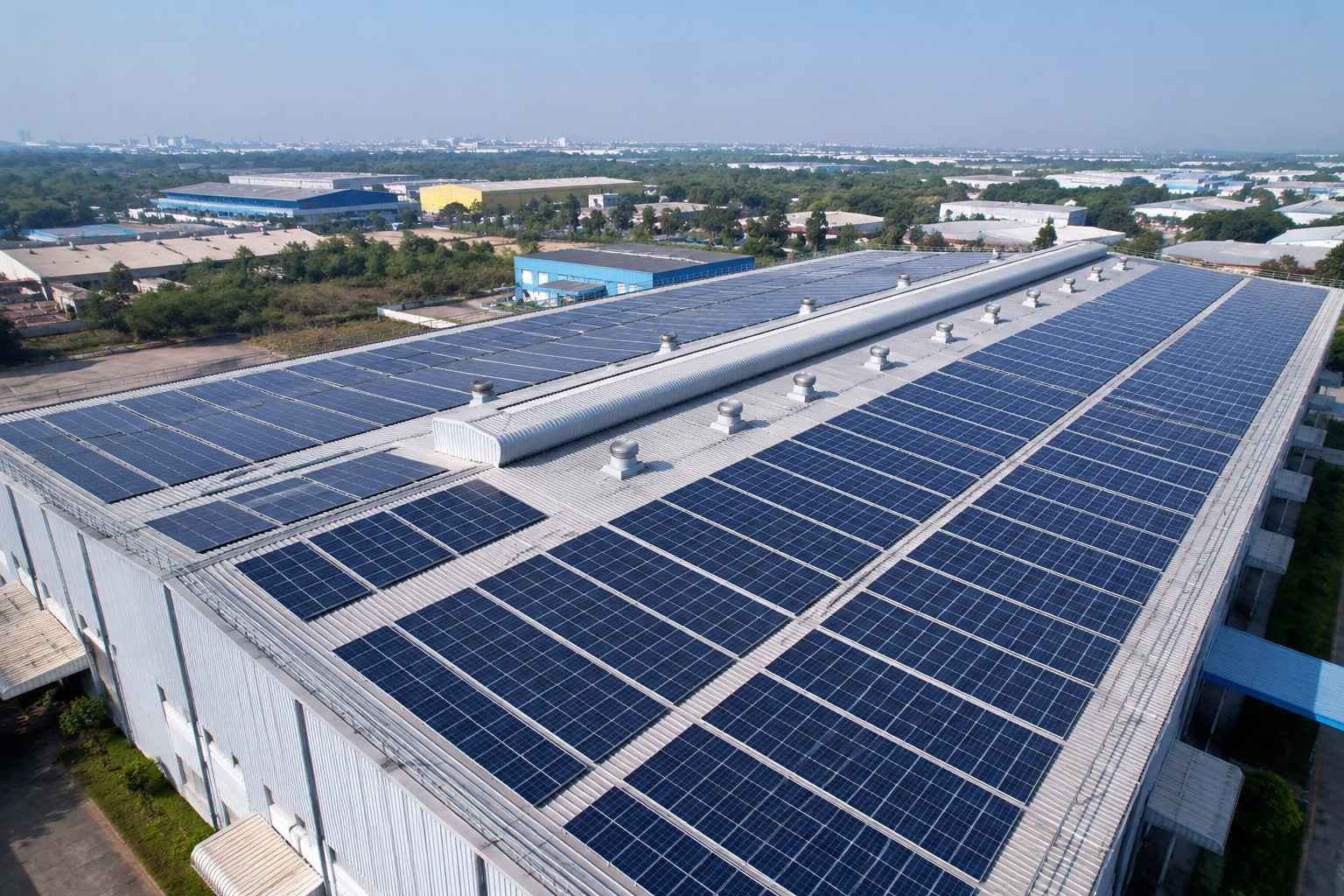
Commercial solar rooftop
See how a commercial solar rooftop system cuts operating costs for offices, hotels, schools, and retail spaces — and what it takes to install one.
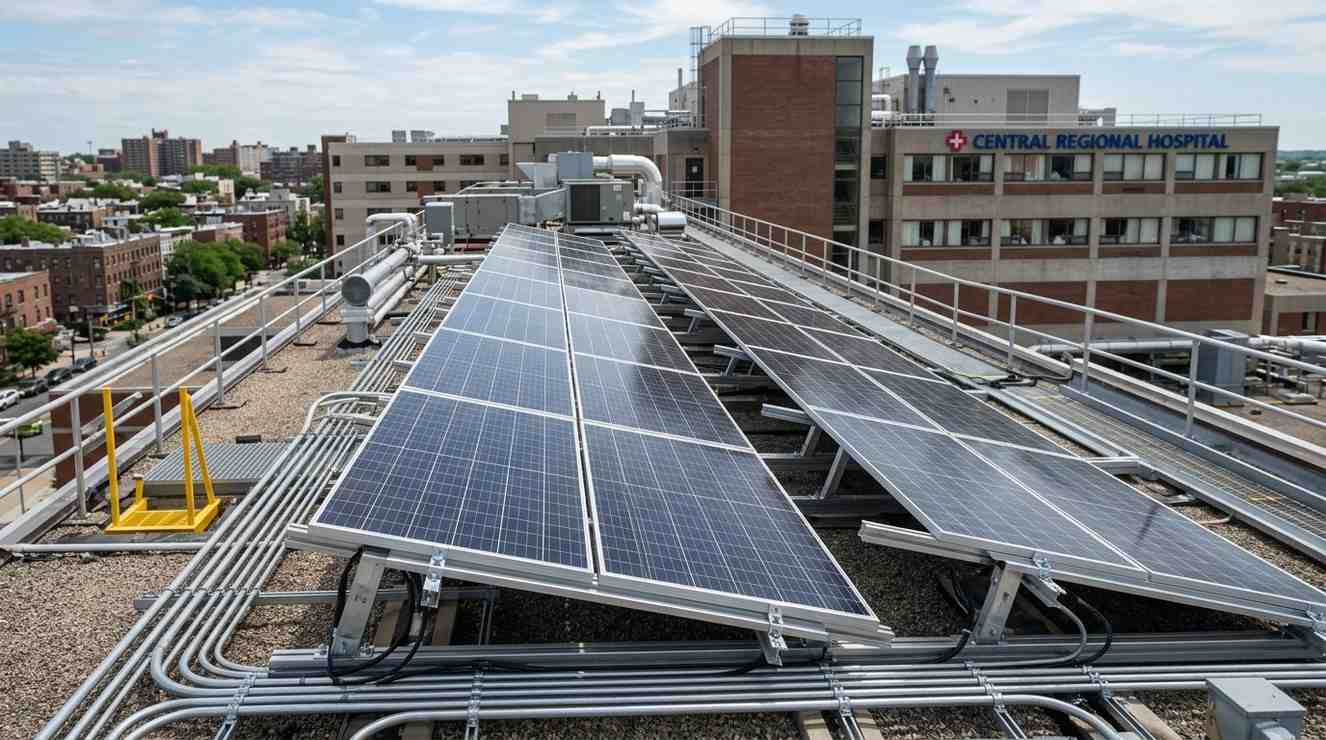
Your electricity bill is probably one of the largest fixed costs on your balance sheet — and unlike rent or salaries, it's one you can actually shrink. A commercial solar rooftop system lets your business generate its own power, lock in energy costs for the next 25 years, and cut operating expenses by a significant margin, all from space you're already paying for.
Whether you run an office campus, a hotel, a school, a hospital, or a retail chain, the economics of going solar have shifted firmly in your favor. We'll walk through why that's happening, how the switch actually works, and what to expect for your specific type of business.
Why commercial solar has become a business decision, not just a green one.
Five years ago, solar was often framed as a sustainability initiative. Today, it's a straightforward cost-reduction strategy — and the CFOs signing off on it care more about payback period than carbon footprint.
- 1
Higher commercial tariffs
Commercial electricity tariffs are typically higher than residential rates, which means bigger savings per unit generated.
- 2
Accelerated depreciation
A solar panel for commercial use qualifies for accelerated depreciation, improving your effective ROI in the first few years.
- 3
Large, flat roofs
Better sun exposure and layout efficiency than a typical home roof — commercial rooftops are often ideal for solar.
- 4
Tariffs keep rising
Rising grid tariffs mean your savings compound every year, while your solar cost is locked in.
How much can a business actually save?
Savings depend on your roof size, energy consumption, and how much of your load happens during daylight hours. Businesses that run heavy daytime loads — offices, retail, hospitals — typically see the fastest payback, often within 3–5 years.
For heavy daytime-load businesses like offices, retail, and hospitals.
Is a commercial solar power plant right for your business type?
Not every business has the same load profile or roof structure, so the ideal commercial solar power plant looks different depending on what you run.
Offices & corporate campuses
Office buildings run most of their major loads — HVAC, lighting, computers — exactly when the sun is out, which makes them some of the best-suited properties for commercial solar rooftop systems.
Large campuses can often support multi-hundred-kW installations across office blocks, parking shade structures, and rooftops combined.
Hotels & resorts
Hotels carry a unique advantage: consistent, round-the-clock energy demand from HVAC, laundry, kitchens, and guest amenities.
A commercial solar power plant paired with the right inverter setup can offset a meaningful share of this baseline load, directly improving margins per room-night.
Schools, colleges & hospitals
Institutional campuses often have large, unobstructed roof areas and predictable daytime usage patterns, which makes them strong candidates for solar.
Hospitals in particular benefit from the reliability angle — solar paired with backup systems reduces dependency on grid stability during peak hours.
Retail, malls & showrooms
Retail spaces run heavy lighting, air conditioning, and display loads throughout business hours — which lines up almost perfectly with solar generation windows.
For malls with common-area load, a shared commercial solar rooftop system can offset costs across multiple tenants.
How does commercial solar rooftop installation actually work?
The process is more structured than residential solar, simply because commercial systems are larger and involve more stakeholders. Here's what it typically looks like:
Energy audit
We assess your current consumption, peak load timing, and roof/land capacity.
System design
Engineers size the plant capacity, panel layout, and inverter configuration for your site.
Financial structuring
CAPEX purchase, lease, or PPA (power purchase agreement) options are compared based on your cash flow preference.
Regulatory approvals
Net metering and DISCOM clearances are filed and tracked on your behalf.
Installation
Civil, electrical, and structural work is completed with minimal disruption to daily operations.
Commissioning & monitoring
The plant goes live with real-time performance tracking.
Worth asking about: if you're evaluating vendors for solar panel installation in Hyderabad, ask specifically how they handle steps 3 and 4 — financial structuring and DISCOM approvals are where commercial projects most often stall. An experienced installer manages both without pulling your team into the weeds.
Why local expertise matters for commercial projects.
Commercial solar rooftop systems interact directly with local DISCOM rules, sanctioned load limits, and net metering policy — all of which vary by state and even by city. A vendor experienced with solar panel in Hyderabad specifically will already know the local approval process, typical timelines, and common site issues before they ever visit your property.
That local track record matters more for commercial projects than residential ones, simply because the stakes — and the paperwork — are bigger.
How to choose the right commercial solar partner.
A low quote isn't the same as a good deal, especially at commercial scale. Here's what to actually evaluate:
Track record with your building type
An installer experienced with hotels may not be the right fit for a hospital's critical load requirements.
Financing flexibility
CAPEX, OPEX/lease, and PPA models all suit different cash flow situations.
Warranty & O&M support
Commercial systems need proactive maintenance, not just a warranty certificate.
Monitoring capability
Real-time dashboards let your facilities team catch underperformance early.
Regulatory experience
Proven history navigating net metering and DISCOM approvals in your specific city.
Frequently asked questions.
How much does a commercial solar rooftop system cost?
Cost depends on plant capacity, roof type, and inverter configuration — larger installations bring the per-kW cost down. We'll give you an exact figure after a free site assessment, based on your actual load and roof area.
How long does commercial solar rooftop installation take?
Most commercial projects take a few weeks from signed agreement to commissioning, depending on system size and how quickly DISCOM approvals come through. Larger campuses or multi-building sites may take longer.
What's the payback period for a commercial solar power plant?
Businesses with heavy daytime loads — offices, retail, hospitals — typically see payback within 3–5 years. Hotels and 24-hour operations may see a slightly longer payback due to a smaller share of daytime consumption, though savings continue well beyond that point.
Can I install solar without paying the full cost upfront?
Yes. Besides a straight CAPEX purchase, most vendors offer lease or PPA (power purchase agreement) models, where you pay for the power generated rather than the equipment itself — useful if you'd rather keep capital free for other business needs.
Will solar work for a building with limited roof space?
Often, yes. Solar carports, parking shade structures, and vertical mounting can supplement rooftop panels for sites with limited flat roof area — an experienced solar panel installation in Hyderabad team can assess this during your site visit.
What happens on cloudy days or during a grid outage?
Your system still generates power on cloudy days, just at reduced output, and any shortfall is drawn from the grid as usual through net metering. For businesses like hospitals that need power during outages, we can pair the system with battery backup for critical loads.
Do I need to change my current electricity connection?
No — a commercial solar rooftop system works alongside your existing connection through net metering, so there's no need to switch providers or change your account setup.
Is it time to switch to commercial solar?
A commercial solar rooftop system turns unused roof space into a long-term cost advantage — lower operating expenses, protection from rising tariffs, and a stronger sustainability story for your business, all at once. Whether you're running an office campus, a hotel, a school, or a retail space, the fundamentals now favor making the switch sooner rather than later.
The best way to know what it means for your specific property is a free site assessment, where we can size a commercial solar power plant around your actual load and roof capacity. Get in touch with our team for a no-obligation consultation and a clear look at your numbers.
Get a Free Site Assessment