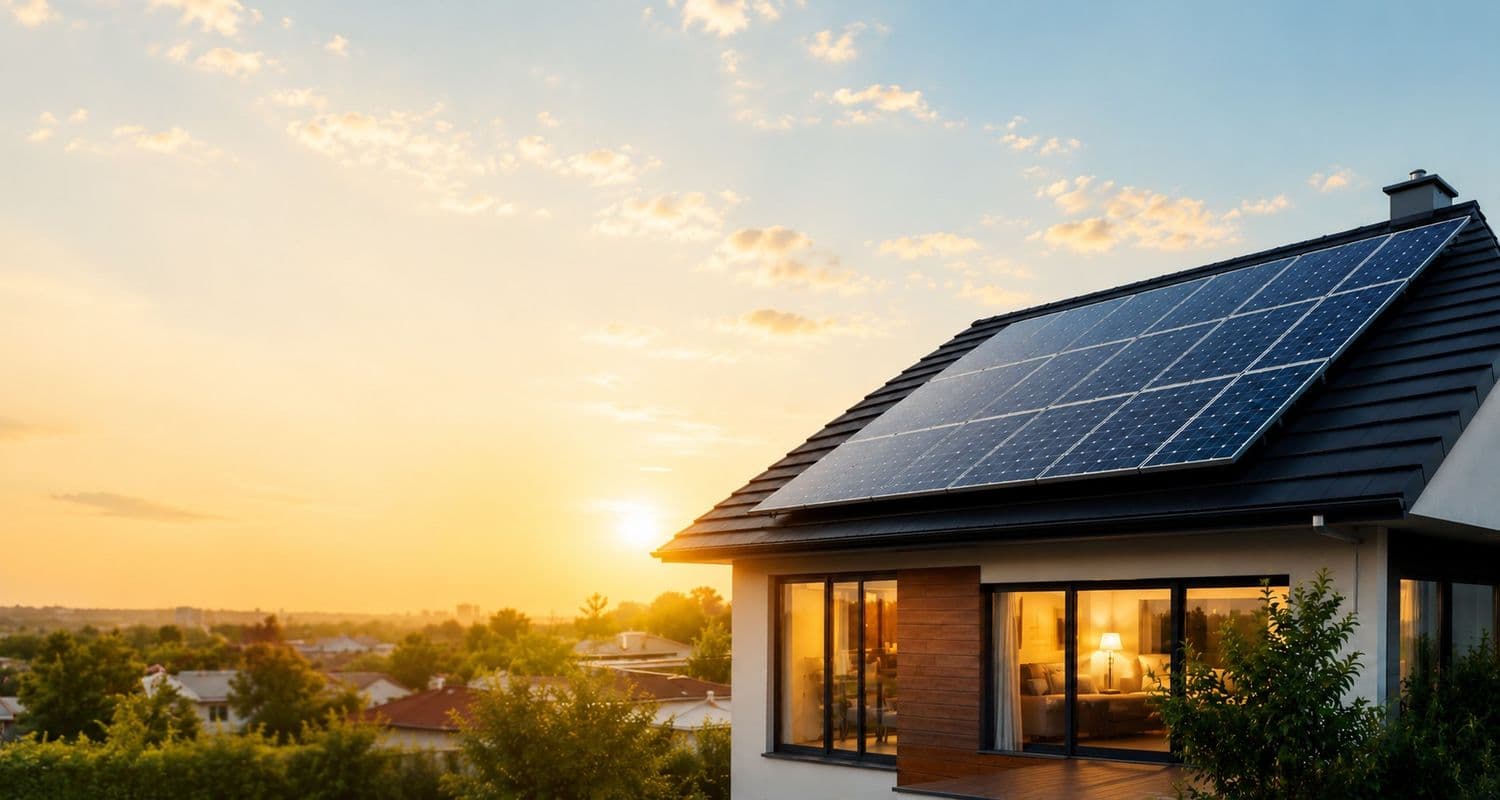
Residential solar rooftop
Cut your monthly bill by up to 90%, pay it back in 3–5 years, and lock in your cost of power for the next 25 years.
Your electricity bill doesn't have to keep climbing every summer. A residential solar rooftop system lets you generate your own power, cut your monthly bill by up to 90%, and get paid back on your investment within 3–5 years — all while adding long-term value to your property.
Whether you own an independent house, a villa, an apartment with a private terrace, or manage a housing society, going solar is no longer a niche decision. It's become one of the most practical financial moves a homeowner can make.
What is a residential solar rooftop system, exactly?
A residential solar rooftop system converts sunlight into electricity using panels mounted directly on your roof. The power generated feeds your home first, and any surplus gets exported to the grid through a process called net metering — which means your electricity meter literally runs backward when you're producing more than you use.
You don't need to change how you use electricity. Your fridge, ACs, geysers, and appliances all run exactly the same way — the difference is where the power comes from, and what you pay for it.
The three core components
Solar panels
Typically Tier-1 monocrystalline panels for maximum efficiency on limited roof space.
Inverter
Converts the DC power from panels into AC power your home actually uses.
Mounting structure
The frame that holds panels securely on your roof, built to withstand wind and weather.
Why homeowners across India are switching.
The math has simply gotten better. Government subsidies, falling equipment costs, and rising grid tariffs have shortened the payback period on rooftop solar installation dramatically compared to even five years ago.
Here's what's driving adoption right now:
Government subsidy support
The PM Surya Ghar scheme now covers a significant chunk of installation cost for eligible homes.
Bill reduction of 70–90%
Most homeowners see this range once net metering is active.
Rising electricity tariffs
Solar locks in your cost of power for the next 25 years.
Property value
Homes with installed solar systems are increasingly attractive to buyers.
Is residential solar rooftop right for your home?
Not every home has identical needs. Here's how the right system size and setup differs depending on your property type.
Independent houses & villas
You likely have the most rooftop flexibility and the highest potential system size. Homes running multiple ACs, a pool pump, or a home theatre setup typically need 5–10 kW systems to meaningfully offset their bill.
The bigger your roof, the more room to future-proof — many homeowners size slightly larger to accommodate an EV charger or added appliances down the line.
Apartments with private terraces
You can absolutely install home rooftop solar panels, though system size is usually smaller — typically 1–3 kW — due to space constraints and shading from neighboring structures.
Check your building bylaws and get sign-off from your RWA before installing — terrace modifications sometimes require society approval even when the terrace is privately owned.
Housing societies & RWAs
The opportunity isn't just individual apartments — it's the common-area load. Lifts, corridor lighting, water pumps, and clubhouse electricity all draw from society funds, and solar can offset a large share of that shared expense.
Societies can access subsidy support up to ₹18,000/kW, capped at 500 kW per society — one of the most cost-effective collective decisions an RWA can make. Requires committee approval, so start early.
Weekend homes & farmhouses
Properties that sit empty for long stretches benefit from a slightly different setup — often a hybrid system with battery backup, since these homes may not always be grid-connected reliably.
If your farmhouse runs a borewell pump, this is usually the single biggest electricity draw worth sizing your system around.
How rooftop solar installation actually works.
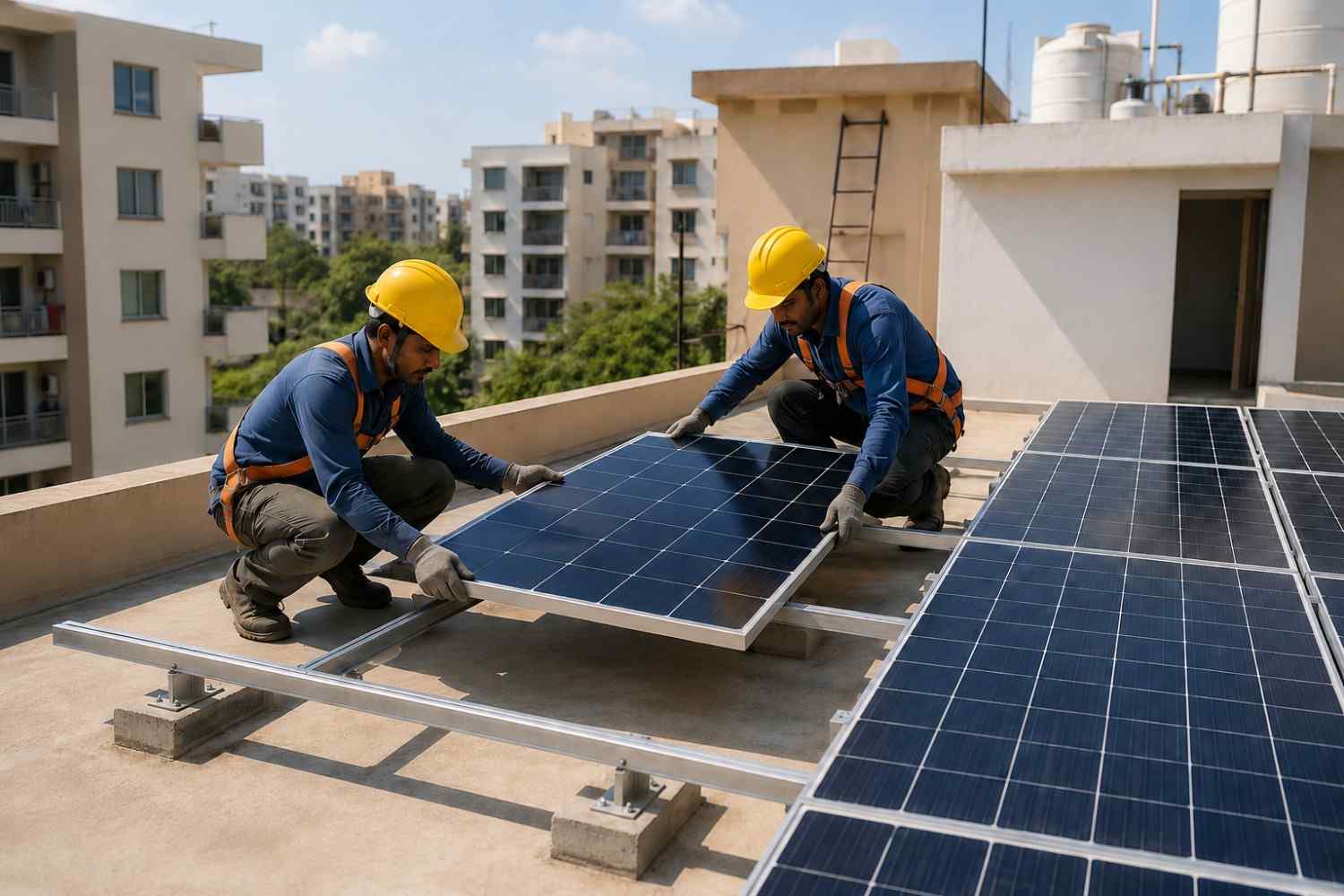
A proper solar panel installation follows a clear sequence — and understanding it helps you evaluate whether an installer is cutting corners.
Site survey
A technician checks your roof's strength, orientation, shading, and your monthly consumption pattern.
System design
Panel count, inverter capacity, and structure type get finalized based on your load.
Subsidy application
Paperwork for solar rooftop subsidy gets filed under your name, ideally handled by your installer.
Installation
Typically completed within a few days for residential systems.
Net meter approval
Your local DISCOM inspects and approves the net meter connection.
Commissioning
Your system goes live and starts offsetting your bill.
Worth knowing: if you're comparing installers for solar panel installation in Hyderabad or any other city, ask specifically who handles steps 3 and 5 — subsidy and net metering paperwork is where delays most often happen. A good installer manages this for you end-to-end rather than leaving you to chase government offices.
Understanding the solar rooftop subsidy.
The PM Surya Ghar Muft Bijli Yojana is the primary subsidy scheme available to residential homeowners right now, and it's worth understanding before you get quotes.
Subsidy amount scales with system size, up to roughly ₹78,000 for eligible households.
Applies to on-grid, net-metered systems installed by empanelled vendors.
Processing typically happens alongside your net meter application.
Housing societies have a separate subsidy structure, capped per kW and per society.
For eligible households on systems of 3 kW and above under PM Surya Ghar.
Get subsidy eligibility confirmed for your specific system size before signing any contract — this is the single number that most affects your actual payback period, and it varies based on your exact kW capacity.
What to ask before you sign with an installer.
A cheap quote isn't always a good deal. Here's what actually matters:
Warranty terms
Look for 25-year performance warranty on panels, not just a 1-year installation warranty.
Structure material
Hot-dip galvanised steel holds up far better than painted steel, especially in coastal or high-wind areas.
Panel tier
Tier-1 panels from established manufacturers perform more consistently over decades than unbranded alternatives.
Post-installation support
Ask who you call if generation drops or a panel needs servicing five years from now.
Monitoring
A live app that tracks generation and savings helps you catch issues early and verify you're getting what you paid for.
Making the switch to solar.
A residential solar rooftop system is one of the few home upgrades that pays for itself and keeps paying you back for two decades after. Between falling equipment costs, generous subsidy support, and rising grid tariffs, the financial case has rarely been stronger — whether you're in an independent house, a terrace apartment, or managing a housing society's shared load.
The best next step is a free site survey, where an installer can size a system specifically for your roof and consumption pattern rather than guessing from a generic package. If you're ready to see what a residential solar rooftop system could save you, get in touch for a free consultation and personalized quote.
Get a Free Site Survey