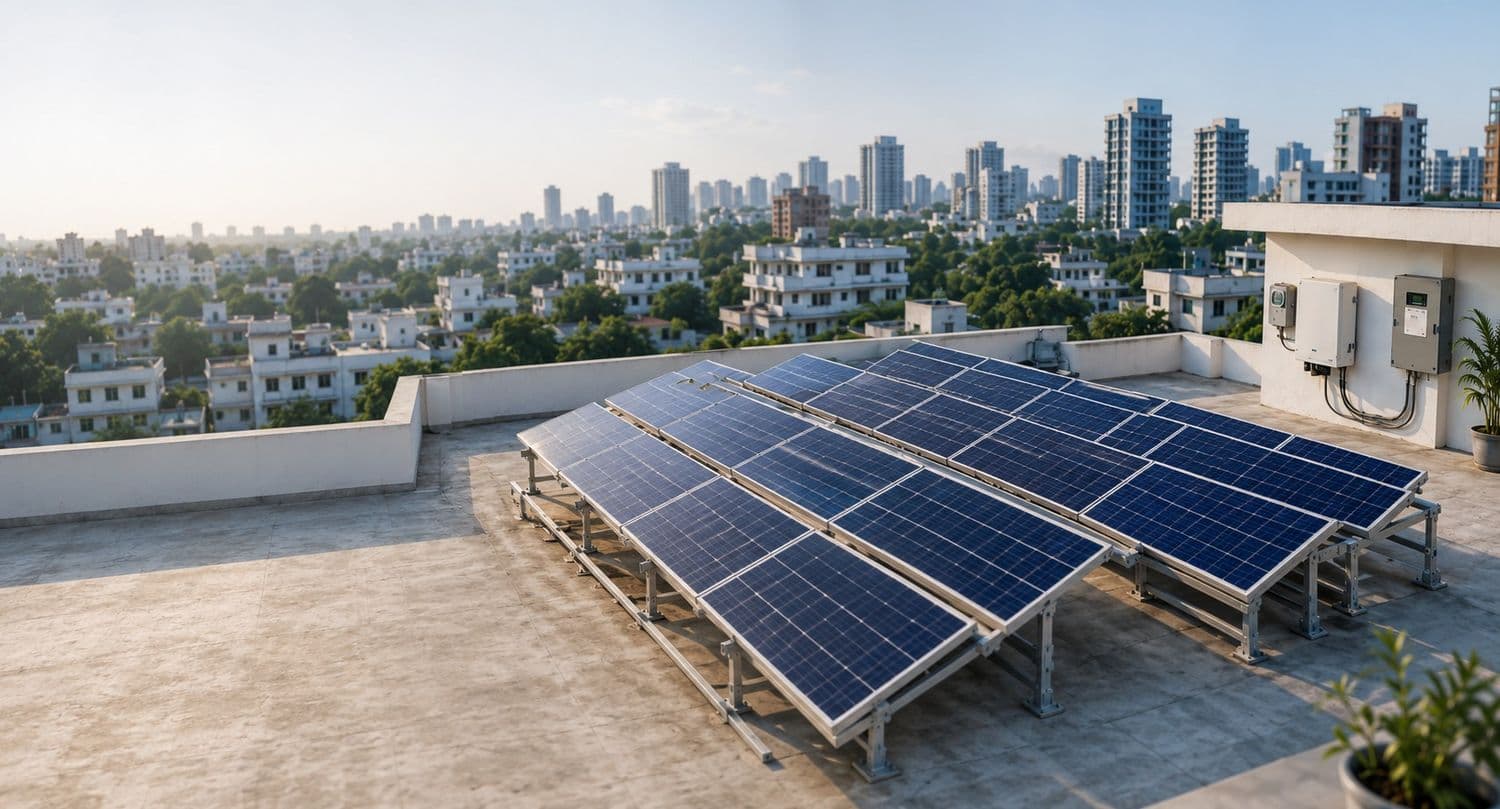
Solar panel installation in Hyderabad
Hyderabad's summers stretch on forever, the sun barely takes a day off, and your electricity bill only seems to know one direction: up. If you've been putting off solar panel installation in Hyderabad because it sounds complicated or expensive, it's worth knowing the picture in 2026 looks nothing like it did five years back.
Here's what actually matters: how on-grid systems work, what subsidy you can actually claim, how to size a system whether you're in a regular home or a bigger villa, and what separates a good installation from one you'll be calling about six months later.
Why Hyderabad genuinely works for solar.
Not every city gets the same value out of solar, but Hyderabad does. It sits in a strong solar zone, so your panels are producing steadily most of the year, not just during a couple of peak months.
A few things are working in homeowners' favor right now:
Telangana's electricity tariffs keep climbing, and the sooner you install, the sooner your payback period starts shrinking
The PM Surya Ghar subsidy in Hyderabad is active and genuinely worth claiming, but subsidy schemes like this rarely stay this generous forever
Panel prices have come down while efficiency has gone up, so you're getting more output per rupee than homeowners did a few years ago
Net metering is already up and running through the local discom, so connecting a grid-tied system isn't the bureaucratic headache people expect
Solar energy in Hyderabad isn't some future-facing idea anymore. It's just a practical call homeowners are making today because the numbers hold up.
What on-grid solar actually means for you.
Most homes in Hyderabad are a good fit for an on-grid solar system, so it's worth understanding how it actually works before you start comparing quotes.
How it works, in plain terms
Your panels generate power through the day. Your home uses that first, and whatever's left over gets exported to the grid through a bi-directional meter. At night, or whenever you're using more than your panels produce, you pull electricity back from the grid like normal.
At the end of the month, you're only billed for the difference between what you sent out and what you pulled in. That's net metering, and it's the whole reason on-grid solar power panel installation ends up being the most cost-effective route for most homes.
Why most people go on-grid
Cheapest option upfront Since there's no battery bank to pay for.
Fully eligible for the PM Surya Ghar subsidy Which battery-based systems usually aren't.
Simple, well-proven technology That's been running on Indian rooftops for decades.
Low maintenance Without the extra upkeep a battery setup would add.
Worth knowing: an on-grid system shuts off during a power cut. That's intentional — it stops your panels from feeding electricity into lines that repair crews might be working on. If you want backup during outages too, that's a different conversation about hybrid systems.
Getting the size right for your home.
This is where a regular home and a bigger villa genuinely part ways, so it's worth being specific instead of throwing out one “average” number.
Standard homes
A 2–3 kW system typically covers you well — lights, fans, fridge, TV, and moderate AC use — without paying for capacity you'll never actually use.
Larger homes and villas
You're probably looking at something in the 5–10 kW range. That size handles the heavier daily load while still qualifying for the top PM Surya Ghar subsidy bracket.
The only real way to get sizing right is to pull out your last few electricity bills and get an actual site inspection done. Roof orientation, shading, and available space all shape what's realistic — and no online calculator replaces someone actually looking at your roof.
PM Surya Ghar subsidy in Hyderabad: what you can actually get.
The PM Surya Ghar Yojana is a central government scheme that pays a direct subsidy straight into your bank account once your rooftop system is up and running. It applies specifically to on-grid systems using DCR panels — meaning ones manufactured domestically.
Here's roughly how the subsidy breaks down for homeowners in Hyderabad:
Entry-level residential systems
Standard urban homes
Maximum under the scheme
Housing society residents: common areas like lifts and lobby lighting can also claim a separate per-kW subsidy, capped at a set limit. A good installer should handle this whole process for you — the load-change request, net-meter approval, all the paperwork — so you're not the one stuck chasing government offices.
What does this actually cost, and when does it pay off?
For a typical 5 kW system, once the subsidy kicks in, most Hyderabad homeowners see their investment pay back somewhere between 3 and 5 years, depending on their tariff and usage. After that, you're generating power at a fraction of grid cost for the rest of the panel's working life — which usually comes with a 25-year performance warranty behind it.
Here's what that looks like in practice: a 5 kW system putting out around 580 units a month against a household pulling 620 units often knocks a monthly bill that would've run into the thousands down to a few hundred rupees. Add that up over the system's lifetime and you're looking at savings that can comfortably run into several lakhs — and that number only grows as tariffs keep climbing.
What actually happens during installation.
Solar panel installation in Hyderabad isn't the drawn-out ordeal people sometimes expect, as long as you're working with a team that actually handles it properly start to finish.
Site inspection
Someone visits your home, checks the roof's orientation, shading, and whether it can structurally handle the setup.
System design and quote
Based on your bill and your roof, you get a properly sized recommendation with real, transparent pricing — not a generic package.
Paperwork and approvals
Load-change application, net-meter request, subsidy documentation, all filed on your behalf.
Physical installation
Panels, inverter, mounting structure, wiring — usually done within a few days for a residential job.
Commissioning and subsidy payout
Once the discom signs off on your net meter, your system goes live and your subsidy starts processing.
What to check before you sign with an installer.
The installer you pick affects your savings far more than most people expect walking in.
Panel brand and tier
Ask exactly which they're quoting — unrated panels degrade faster and just underperform over time.
Warranty terms in writing
At least 25 years on panel performance and 5 years on the inverter.
Workmanship guarantee
Ask if they back their own workmanship separately from the equipment warranty.
Subsidy handling
Make sure it's actually included, not something you're left chasing on your own.
After-sales support
Ask what it looks like once the system's running — cleaning, monitoring, and how fast they respond if something goes wrong.
Questions people actually ask.
How much roof space does solar panel installation in Hyderabad actually need?
A rough rule of thumb is about 100 square feet per kW, so a 3 kW system needs roughly 300 square feet of usable, shadow-free roof. Larger villas going for 5–10 kW should plan for proportionally more space.
Is an on-grid solar system in Hyderabad worth it if I already have a home inverter?
Yes, they're solving two different problems. Your inverter covers short outages, while solar actually brings down your electricity bill day to day. Most homes end up benefiting from having both, and neither gets in the other's way.
How long does solar power panel installation actually take, start to finish?
Once the site inspection and design are locked in, the physical install usually takes just a few days. The full process, including approvals and net-meter commissioning, generally runs 3–6 weeks depending on how fast your discom moves.
Do I need to redo my roof before installing panels?
Not usually, as long as your roof's structurally sound and not close to the end of its life. If it needs repair soon anyway, get that sorted first, since taking panels down later to redo roofing just adds cost you didn't need to spend.
Can I still get the PM Surya Ghar subsidy in Hyderabad if I go for a bigger system?
Yes, but the subsidy caps out at the 3 kW-and-above tier, so bigger systems don't get more subsidy per kW past that point. The financial case for larger systems still holds up fine because of the electricity savings alone, even once the subsidy plateaus.
What happens to my solar system during a power cut?
An on-grid system automatically shuts off during an outage — it's a built-in safety measure, not a malfunction. If you want power to keep running during cuts too, that needs a hybrid setup with battery storage, which is a different system from standard on-grid solar.
Making the call.
Solar panel installation in Hyderabad has gone from a nice-to-have to a genuinely smart financial move, especially with the PM Surya Ghar subsidy in Hyderabad still active and tariffs showing no sign of dropping. Whether you're in a standard home or a bigger villa with heavier usage, the numbers work in your favor as long as the system's sized and installed the right way.
The best next step isn't a phone quote — it's a free site inspection. Reach out to us for a free consultation, and we'll show you exactly what your roof can save you.
Get a Free Site Inspection