Off-Grid Solar Systems
for total energy independence.
A solar system that needs no grid.
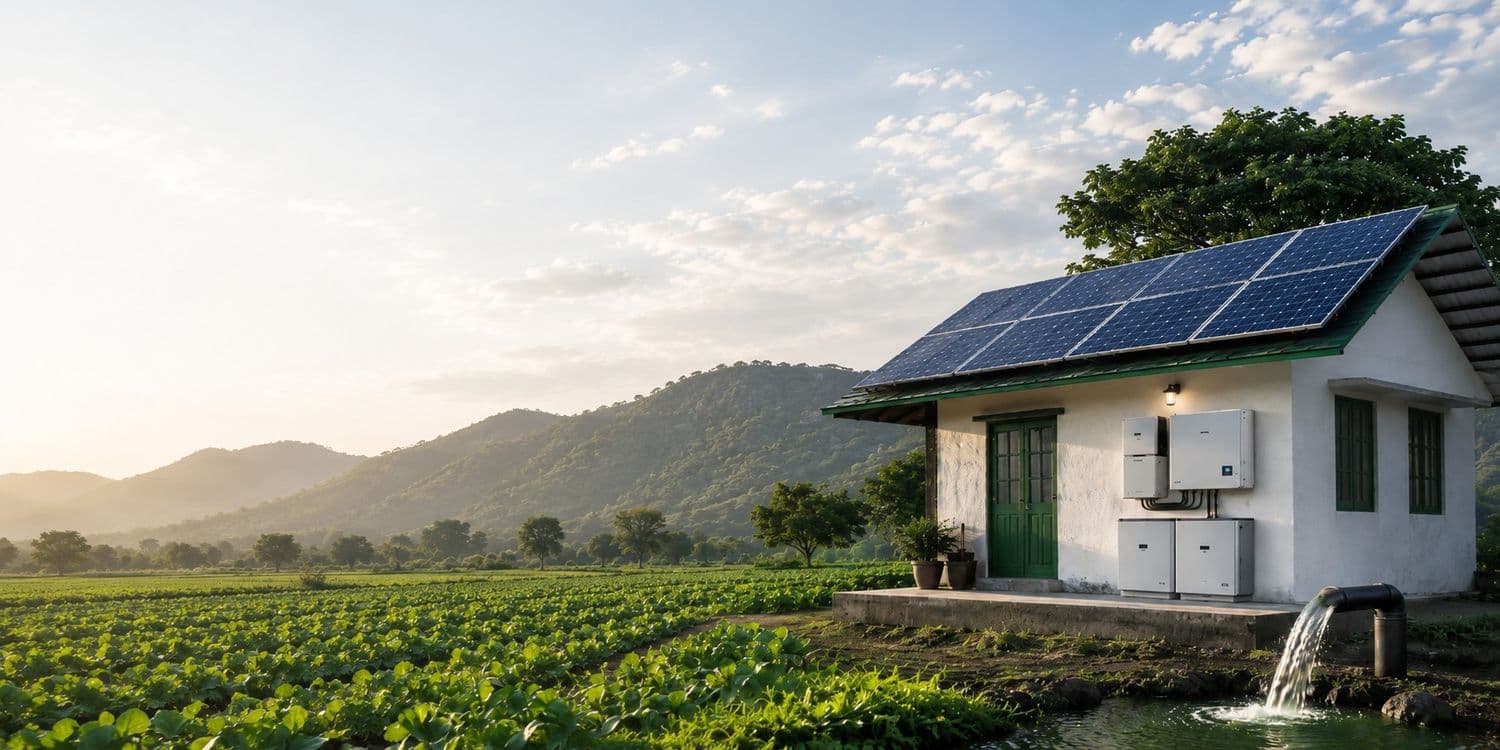
An off-grid (or standalone) solar system isn't connected to your utility at all. It generates, stores, and supplies your own electricity — a complete energy island.
During the day, panels power your home and charge the battery bank. At night, the battery takes over and keeps everything running. You don't draw from the grid because the grid isn't in the equation.
- 1Solar Panels
- 2Battery Bank
- 3Charge Controller
- 4Off-Grid Inverter
- 5Mounting Structures
- 6Safety Accessories
Sunlight in, 24×7 power out.
The whole system runs automatically — sunshine charges, batteries hold, inverter delivers.
Panels capture sun
Solar modules absorb sunlight and produce DC electricity.
Charge controller
Regulates the current flowing into the battery — protects from overcharge.
Battery stores it
Daytime surplus charges the battery bank for night and cloudy-day use.
Inverter converts
Pulls DC from battery and converts to AC for home appliances.
House stays lit
Lights, fans, fridge, pumps — running 24×7 without touching the grid.
Six parts that make your own power plant.
Every off-grid system is built around the same six elements — sized to your roof, your load, and how many backup hours you want.
Solar Panels
Tier-1 monocrystalline modules — higher efficiency, better low-light performance. We mount them at the optimal tilt to catch maximum sunlight throughout the year.
Battery Bank
The heart of any off-grid setup. Lithium or VRLA batteries store daytime solar production for night-time use — sized to your backup hours (whether 2 hours or 12).
Solar Charge Controller
Sits between panels and battery — regulates the charging current, prevents overcharge, and routes excess power. Modern MPPT controllers squeeze 20–30% more out of your panels.
Off-Grid Inverter
Converts stored DC battery power into AC for your appliances. Most modern off-grid inverters include built-in battery management — fewer separate boxes, simpler diagnostics.
Mounting Structures
Hot-dip galvanised steel rated for cyclonic wind speeds. Tilt-optimised for your latitude, designed to hold panels firm for 25+ years of monsoons, heatwaves, and storms.
Safety Accessories
MC4 connectors, DC and AC combiner boxes, earthing strips, conduit trays, and a lightning arrester. The invisible network that keeps everyone safe — installed to code.
Capacities & daily generation.
Pick a size that matches your daily load — and tell us how many hours of backup you want.
* Indicative averages assuming 4 daylight equivalent hours. Actual numbers vary by location, panel orientation, and shading.
Higher upfront, cheaper over a lifetime.
Batteries make off-grid pricier on day one, but the math wins long-term — especially against grid electricity or diesel generators.
Per Wp installed, batteries included. Final cost depends on the size of your battery bank.
Tell us how long you need backup at night. Bigger battery = bigger cost.
After breakeven, decades of free power — vs years of rising grid or diesel costs.
Four reasons people go off-grid.
True energy independence
When the grid is unreliable — or simply not there — off-grid is the only solar setup that keeps your lights on, irrigation pumps running, and fridges humming.
Built for remote sites
Farms, hilltop villages, telecom towers, weekend homes, construction sites — places where extending grid lines costs more than installing solar from scratch.
Clean and silent
Replaces noisy, polluting diesel generators with a zero-emission setup. No fuel costs, no servicing, no smoke — just sunlight and storage.
Long-term economical
Higher upfront cost than on-grid because of batteries, but cheaper over 20+ years than the cumulative cost of grid power or diesel — especially as tariffs rise.
On-grid vs off-grid — which is right for you?
Power your own grid.
Tell us where you are and what you need to run — we'll size the panels, the battery bank, and the inverter for true energy independence.